MPH vs BSc Public Health in Ghana: Which Should You Study?
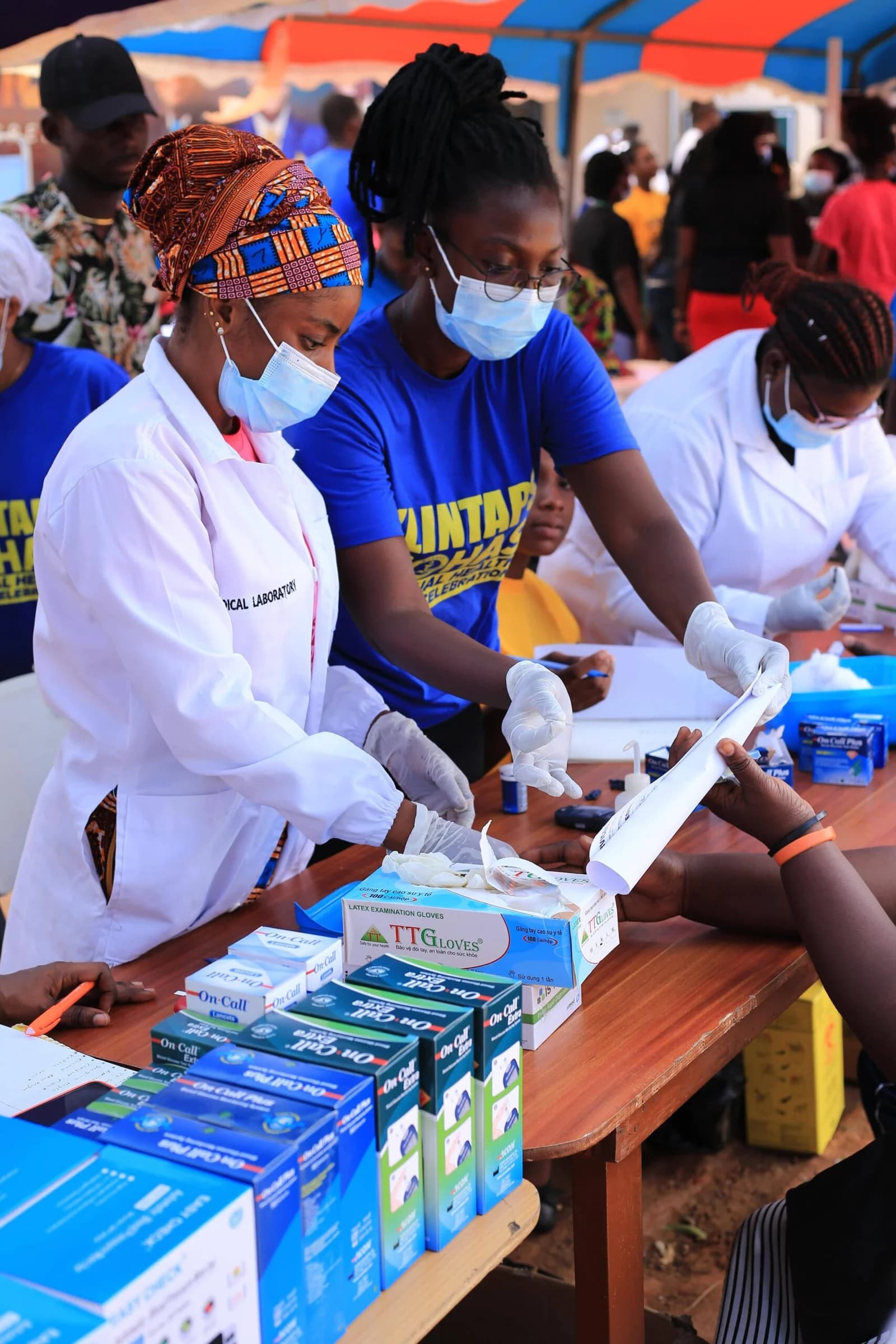
Deciding between an MPH and a BSc in Public Health in Ghana comes down to where you are in your career. The BSc Public Health is your undergraduate entry point into the field, while the Master of Public Health (MPH) is a postgraduate qualification for those advancing into senior roles. At Klintaps University College of Health and Allied Sciences (KCoHAS), you can study both, building a single, coherent pathway from first degree to specialist.
What is the difference between an MPH and a BSc in Public Health? A BSc Public Health is a four-year undergraduate programme that builds your foundation in epidemiology, biostatistics, environmental health and disease control. It qualifies you for entry-level roles such as Disease Control Officer. An MPH, or Master of Public Health, is a postgraduate degree that requires a relevant first degree to enter. It deepens and specialises your expertise for leadership in epidemiology, health policy, programme management and research. In short, the BSc opens the door to the profession; the MPH equips you to lead within it.
Where can you study public health in Ghana? Public health is a competitive and well-served field in Ghana, with several strong universities and university colleges offering both undergraduate and postgraduate routes. KCoHAS is among the few institutions where you can complete both pathways under one roof, progressing from the BSc Public Health into the MPH or MPhil Public Health without switching schools. Founded in 2017 and affiliated with the University of Cape Coast, KCoHAS is accredited by the Ghana Tertiary Education Commission (GTEC), and its allied-health programmes are designed to meet Allied Health Professions Council (AHPC) licensing standards.
Build your foundation in epidemiology, biostatistics and disease control with the BSc Public Health (Disease Control) programme at KCoHAS.
Explore BSc Public HealthWhich should you do first, the BSc or the MPH? You almost always start with the BSc, unless you already hold a relevant first degree in a related discipline. The standard route is to complete an undergraduate degree, gain some field experience, then progress to the MPH. The BSc Public Health gives you the core competencies in disease surveillance, biostatistics and environmental health that the MPH then builds upon. Trying to leap straight to a master's without the right undergraduate grounding leaves gaps that postgraduate study assumes you have already filled.
Can you do an MPH without a public-health BSc? Yes, in many cases. An MPH typically requires a relevant first degree rather than a BSc Public Health specifically. Graduates from fields such as nutrition, environmental health, biological sciences, medicine and other health-related disciplines frequently enter MPH programmes. This is one of the strengths of the qualification: it draws professionals from different backgrounds into public health, broadening the field. That said, candidates from a public-health undergraduate background often find the transition smoother because the core vocabulary and methods are already familiar.
Who is each pathway for? The BSc Public Health is for school-leavers and early-career people who want to enter the profession and start working in community and population health. It suits those drawn to disease prevention, health promotion and frontline public-health roles. The MPH is for working professionals and graduates who want to move up: into senior epidemiology, health policy design, managing large health programmes, or research that shapes practice. If your goal is to lead teams, design interventions or influence policy rather than deliver them on the ground, the MPH is the pathway built for you.
What jobs follow each pathway? A BSc Public Health graduate typically begins as a Disease Control Officer, with roles spanning disease surveillance, health education, immunisation support and environmental health monitoring across district health services, NGOs and health facilities. Employment outcomes for the programme are strong, with around 92% of graduates finding work in the field. An MPH opens more senior doors: epidemiologist, health programme manager, monitoring and evaluation specialist, policy analyst and public-health researcher, often within ministries, international agencies, research institutions and larger NGOs. The MPH is the qualification that moves you from implementing programmes to designing and directing them.
How much do public-health roles pay in Ghana? Figures vary by employer, sector and experience, so treat these as estimates rather than guarantees. As a guide, entry-level BSc Public Health roles such as Disease Control Officer typically pay in the region of GHS 3,500 to GHS 5,500 per month. An MPH generally brings a meaningful career and salary uplift over BSc-entry roles, because it qualifies you for the senior, specialist and management positions that sit above frontline work. Rather than a fixed number, think of the MPH as widening the ceiling on what you can earn and the seniority you can reach.
Know which pathway fits your goals? Start your application and let the admissions team confirm your entry requirements.
Apply to KCoHASIs an MPH worth it in Ghana? For the right person, yes. The MPH is worth it when you have clear ambitions toward leadership, specialised epidemiology, policy or research, and when you have the first degree and ideally some field experience to make the most of postgraduate study. It is less worth rushing into straight after a BSc with no work behind you, since much of its value lies in applying advanced methods to real public-health problems. Weigh it against your goals: if you want to stay close to frontline delivery, a strong BSc and experience may serve you well; if you want to direct the work, the MPH earns its place.
How does KCoHAS structure these pathways? KCoHAS offers the BSc Public Health as a four-year undergraduate programme covering epidemiology, biostatistics, environmental health and disease control, alongside the postgraduate MPH and MPhil Public Health for those advancing further. Because both sit within the same institution, students can plan a long-term trajectory rather than treating each qualification in isolation. With roughly 1,000 students, more than 600 graduates and over 70 faculty across 16 programmes, KCoHAS combines public health with related fields such as community nutrition and health services management, giving postgraduates a broad, applied environment to specialise in.
How do you decide between the two right now? Map it to your starting point. If you have no degree yet, begin with the BSc Public Health, build experience, then revisit the MPH later. If you already hold a relevant first degree and want to move into senior epidemiology, policy, programme management or research, the MPH is your next step. If you are unsure whether your background qualifies you for postgraduate entry, ask the admissions team directly before deciding, since entry requirements depend on your specific degree and experience.
Ready to take the next step? Explore the BSc Public Health (Disease Control) programme page if you are starting your journey, or review the postgraduate options if you are advancing toward an MPH or MPhil Public Health. When you know which pathway fits, you can begin your application online, and the admissions team can confirm whether your qualifications meet the entry requirements for either route.
Explore Related Programmes
Equip yourself with the knowledge and skills to prevent, detect, and respond to infectious and non-communicable diseases at the community and national level.
Focus on public health nutrition, developing programmes to improve the nutritional status of communities.
Develop the leadership and management competencies needed to plan, organise, and oversee healthcare delivery systems and institutions.
Stay Updated
Subscribe to our newsletter to receive the latest news and updates from Klintaps University College.